CAM 18 Cover
Although the CAM 18 route was launched in July 1927, it was not until 1932 that the route was extended to include stops at Watertown, South Dakota.1 The first flight from Reno, Nevada, to Watertown was completed on January 16.
This cover bearing a plate number single of the flat plate 14¢ American Indian stamp was postmarked in Reno the day before the flight and postmarked in Watertown the day after the flight.
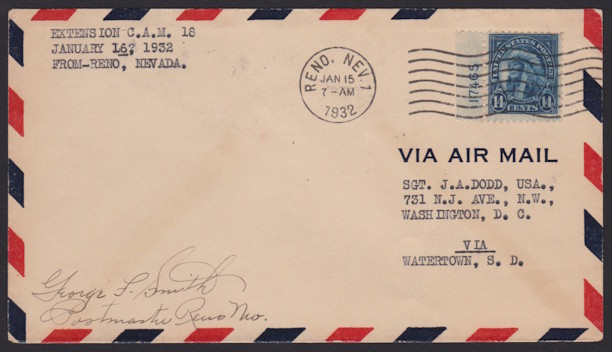
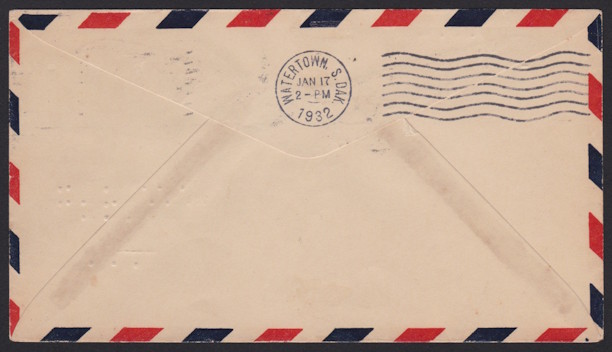
This is, of course, a philatelic solo use of the American Indian stamp. If the envelope’s first flight status wasn’t confirmation enough, the fact that the 14¢ postage affixed to the cover was nearly three times the contemporary air mail postage rate of 5¢ serves as ample evidence.2
We can draw no definitive conclusions regarding the identity of the addressee, one Sgt. J. A. Dodd of Washington, D.C.; however, the envelope was autographed by George F. Smith, who served as Reno’s postmaster from 1926 until 1934 and provided advice on post office matters to United States Senator Tasker Oddie.3 4
References
- CAM Contract Air Mail First Flights CAM-18. Aerodacious. 2 Nov. 2007. Accessed 12 Jul. 2026.
- Beecher, Henry W., and Anthony S. Wawrukiewicz. U.S. Domestic Postal Rates, 1872–2011. 3rd ed. Bellefonte, Pennsylvania: American Philatelic Society, 2011.
- Postmasters by city. USPS.com. Accessed 12 Jul. 2026.
- George F. Smith Papers. University of Nevada, Reno - University Libraries. Accessed 12 Jul. 2026.
Published 2026-07-12